POS for Chinese restaurants
Published by KwickPOS, a restaurant POS company. We include KwickPOS in comparisons and say so when we do. How we handle this.
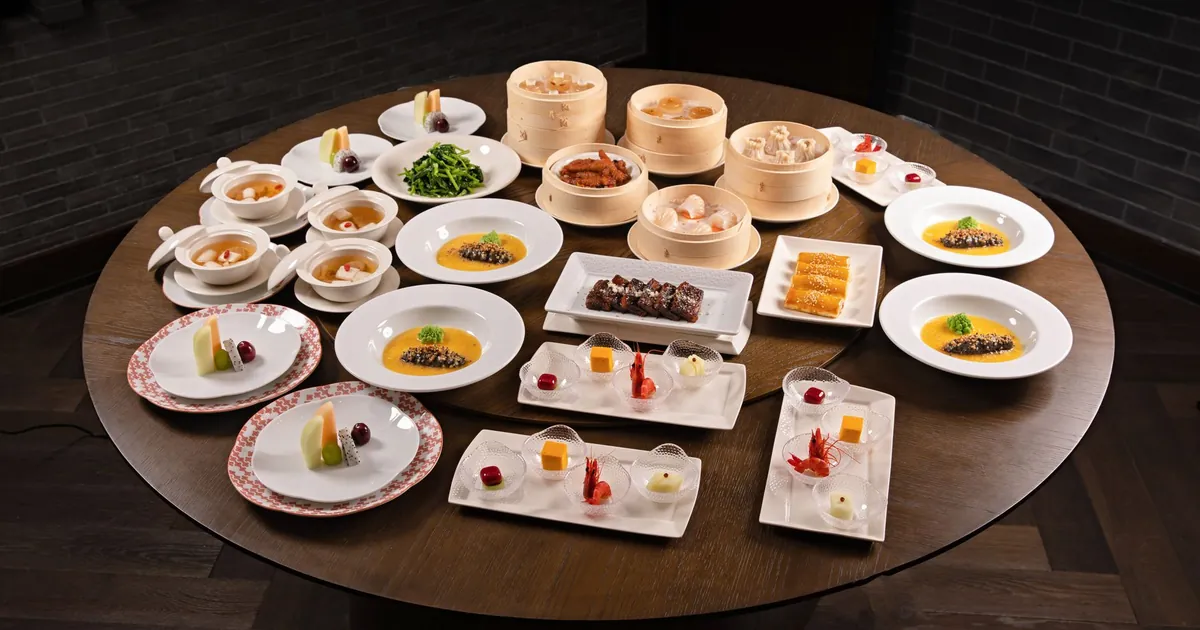
A Chinese restaurant needs a POS that does five things most systems treat as extras: bilingual menus and kitchen tickets, routing each dish to the right station so a family-style table eats together, a running tally for dim sum, banquet packages with course-by-course firing, and a clean way to take QR wallet payments if your guests use them. Test all five with your own menu before you sign.
Most point-of-sale systems are built around one pattern: a server takes an order, it prints in the kitchen, and a check comes at the end. Chinese restaurant service breaks that pattern in several places at once. Dim sum arrives continuously from carts instead of from one order. Dishes are shared across the table. A whole fish, a stir-fry and a roast duck go to three different stations but need to reach the table together. Banquets fill the room with preset menus. And the kitchen may read Chinese while the dining room works in English.
This guide goes through each of those, what a POS has to do about it, and what to make a vendor show you in a demo.
Bilingual menus, screens and kitchen tickets
"Bilingual" can mean several different things, and vendors use the word loosely. Separate them when you ask:
- Two names per menu item. Each dish should carry a Chinese name and an English name, Simplified or Traditional depending on your staff and guests. The system then shows whichever one each screen or printer needs.
- Kitchen tickets in Chinese. Many Chinese kitchens work entirely in Chinese. Check that kitchen printers and kitchen display screens can print or show Chinese characters, including the modifiers. It is common for item names to print correctly while free-text modifiers do not.
- Guest-facing menus in both. Online ordering pages, QR menus and kiosks should show both names, so non-Chinese guests and Chinese-speaking guests can each read the dish.
- Staff screens in Chinese. Buttons, modifier lists and reports in the language your staff read fastest can cut entry mistakes. This is a separate question from menu names; ask about it on its own.
- Search. On a long menu, being able to search by pinyin or by dish number is faster than scrolling categories during a rush.
In the demo, have the vendor enter "steamed whole fish, ginger and scallion, light sauce, no MSG" and print it to a kitchen printer. Look at the paper, not the screen.
Dim sum: a running tally, not an order
During weekend dim sum, a table receives baskets from several cart attendants over an hour or more. On paper, that is a stamp card on the table. In a POS, it needs to be a running tally per table that cart staff can add to quickly.
- Fast entry. A grid of the day's dim sum items on a handheld or a cart-side tablet, where one tap adds one basket to a table. Long-press or a number pad for several at once.
- Pricing by size. Most dim sum menus price by basket size (small, medium, large, special) rather than by dish. Check that the system can price that way without building every dish three times.
- Running out. When a basket sells out, marking it unavailable on every handheld at once saves cart staff from offering it.
- Checkout. At the end, the server prints the table's delivery list so guests can check it. Even splits by headcount should take one step.
Station routing: getting a family-style table served together
A Chinese kitchen is usually divided into stations: wok, steamer and dim sum, roast and barbecue, cold dishes, seafood, and sometimes noodles or congee. Each station should receive only its own items, and a table's order should split and reach every station at the same moment.
- Routing by item or category. Set each menu item, or each category, to the station that cooks it. A ticket with five dishes then splits across stations automatically.
- Holding and firing. Cold dishes usually go out first. The server should be able to send them now and hold the hot dishes until the table is ready, then fire them together.
- Kitchen screens or printers. Kitchen display screens show elapsed time per ticket and let a cook clear a dish with one tap. Printers are cheaper and survive heat and grease well. Many kitchens use printers at the wok line and screens at expo.
One possible layout for a 150-seat restaurant: the wok line, steamer and roast station each get a kitchen printer; cold dishes print at the pantry; and the expo station gets a kitchen display that shows every ticket for a table, so the expediter can hold a finished fish until the wok dishes for the same table are ready.
Shared dishes and split checks
Family-style ordering means most dishes belong to the table, not to a seat. When a large table wants separate checks, the POS has to split shared dishes evenly while keeping personal items, such as a bowl of congee, with the person who ordered them.
- Even split by headcount, in one step.
- Split by item, with shared items divided across the people who shared them.
- Combining two or three round tables into one check for a large family group, with kitchen routing still working by table.
- Dietary modifiers (no shellfish, no peanuts, vegetarian) attached to the specific dish, printed clearly in the kitchen's language.
Banquets
Wedding banquets, company dinners and New Year celebrations can fill the dining room with preset menus served course by course. Without banquet features, managers run these events on paper next to the POS.
- Preset packages. A named banquet menu with a price per person or per table, with every course loaded once.
- Deposits. Take a deposit at booking and apply it to the final bill.
- Headcount changes. Update the guest count late and have the total recalculate.
- Course firing. Fire course two for every banquet table at once, so the whole room is served together.
- One bill. Consolidate all banquet tables, plus anything ordered on top of the package, into one invoice for the host.
Ask the vendor to set up a 20-table banquet with a ten-course menu in the demo and fire course three. If the answer involves exporting to a spreadsheet, the feature isn't really there.
Market-price seafood and daily specials
Live seafood and seasonal dishes change price daily, sometimes by weight. Check that a manager can set today's price once at opening and that servers can enter a weight at the table, without a manager override on every order.
WeChat Pay and Alipay
If your guests ask to pay with WeChat Pay or Alipay, how that payment fits into your POS matters more than whether it is possible at all.
- Inside the POS. The server chooses WeChat Pay on the check, a QR code appears, the guest pays, and the check closes. The payment shows up as its own payment type in the end-of-day report.
- Beside the POS. A separate device or app takes the payment and the cashier closes the check by hand as "other". This works, but it means typing amounts twice and reconciling the two systems at close.
Ask to see a full wallet payment from open check to closed check. Also ask when wallet payments settle into your bank account and through which provider, because it is often a different schedule and a different statement from your card payments.
What the vendors document
We checked the vendors' own help pages on October 1, 2026. This is what they say, not a test of each system.
- Chinese on kitchen tickets. Toast's support center says menu items with Roman and Chinese characters, traditional or simplified, "will automatically separate on the KDS screen and printed tickets". Square lets you set kitchen names "in the preferred language of your kitchen staff", but that article does not say whether Chinese characters print on its kitchen printers, so test it. For other systems, ask for a printed sample.
- WeChat Pay and Alipay. Clover's 2020 announcement of its Station Pro listed Alipay and WeChat Pay among its payment options; ask whether that is still offered on current hardware. We did not find US documentation of WeChat Pay or Alipay for Toast, Square, SpotOn, Lightspeed Restaurant or TouchBistro. Ask each vendor directly, and ask KwickPOS too.
Takeout, delivery and the phone
Many Chinese restaurants do a large share of their business as takeout. Online ordering on your own website, phone orders entered quickly, and delivery-app orders that print in the kitchen without being retyped all save labor. Our comparison of POS systems covers which vendors include online ordering, and the card processing guide explains how online and in-person card fees differ.
When the internet goes down
A Friday-night outage stops a cloud-only POS. Ask each vendor exactly what keeps working offline: taking orders, printing kitchen tickets, and taking card payments. If cards can be taken offline, ask how long, up to what amount, and who carries the risk if a card taken offline is later declined.
What to bring to the demo
- Your full menu in Chinese and English, including dim sum sizes and market-price items.
- A list of your kitchen stations and what each one cooks.
- A real banquet menu you've served.
- Your mix of payment types, including how many guests pay by QR wallet.
Then run the general demo tests in how to choose a restaurant POS: your hardest menu items, split payments, an internet outage, end-of-day reports, a support call at your busy time, and a data export.
Common questions
Can a POS print kitchen tickets in Chinese?
Some can. Ask for a printed sample with modifiers, not just item names, because item names often print correctly while free-text modifiers don't.
How should a POS handle dim sum?
As a running tally per table that cart staff add to with one tap, priced by basket size, with an even split by headcount at checkout.
Do I need WeChat Pay and Alipay?
Only if your guests ask for them. If you take them, it is better when the payment closes the check inside the POS than on a separate device.
What is station routing?
Sending each dish to the station that cooks it, such as wok, steamer or roast, so a shared table's dishes are fired together.
Sources
- What is the difference between Name, POS Name and Kitchen Name, Toast. Checked October 1, 2026.
- Kitchen-facing names with Square for Restaurants, Square. Checked October 1, 2026.
- Small businesses can deliver big at checkout with Clover Station Pro (2020), Clover. Checked October 1, 2026.